Case study: Catalyzing Freshwater Accountability in the Mississippi River Basin
27/10/2025
The Challenge
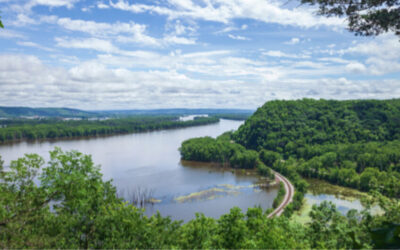
The Mississippi River Basin is one of the most ecologically and economically vital watersheds in the world – draining 41% of the contiguous U.S. and serving as a critical resource for communities, agriculture, and industry. Yet, corporate activity in the region continues to drive severe degradation of water quality and freshwater ecosystems, contributing to widespread nutrient pollution, habitat loss, and a growing Dead Zone in the Gulf of Mexico.
Despite increasing private sector interest in environmental stewardship, many companies struggle to set meaningful freshwater goals grounded in science. They lack access to localized data and tools needed to implement the Science Based Targets Network (SBTN) framework, particularly in data-scarce, high-impact basins like the Mississippi.
The Approach
With support from the Accountability Accelerator, WWF-US partnered with local NGO Environmental Initiative and technical collaborators to pilot a new model for regional freshwater accountability.
The project tackled two key barriers simultaneously:
- On the science side, WWF led a foundational review of environmental flow models, data gaps, and methods for setting credible freshwater thresholds in the Mississippi Basin. They also prototyped the use of Large Language Models (LLMs) to streamline data gathering – achieving a 95% match rate with expert-curated sources, showcasing the potential of AI to accelerate technical groundwork.
- On the corporate engagement side, Environmental Initiative began stakeholder mapping and company outreach to identify major players with freshwater impacts in the region. Together, they created a safe, pre-competitive learning space to explore freshwater target-setting aligned with SBTN.
The project delivered key scientific and stakeholder-building outputs, including:
- A comprehensive metadata compilation for 14 Upper Mississippi sub-basins.
- A detailed stakeholder map and engagement plan.
- Exploratory corporate interviews.
- Exposure of the work to over 100 companies through webinars and briefings.
The Impact
This pilot helped establish the Mississippi River Basin as a viable and strategic region for freshwater SBTN implementation – where corporate action can align with ecological thresholds and local priorities. It also surfaced replicable innovations, like the LLM-assisted methodology for compiling basin data, which could streamline target-setting in other regions with limited technical capacity.
Just as importantly, it laid the foundation for a collaborative, cross-sector pilot in the Upper Mississippi Basin that will integrate Indigenous and local community engagement. This next phase will deepen partnerships and move from readiness to implementation, with the potential to influence how companies address freshwater risks at scale.
The Accelerator’s Role
The Accountability Accelerator’s catalytic funding made it possible to close the science-to-action gap for freshwater science-based targets in a critical U.S. geography. By funding both the scientific groundwork and stakeholder orchestration, the Accelerator helped de-risk a complex, early-stage effort and unlock deeper engagement between companies, scientists, and civil society.
This case illustrates the Accelerator’s unique value in bridging technical frameworks and real-world action – supporting collaboration across silos and demonstrating how credible corporate nature action can take root in major ecological systems.