Case study: Building Accountability Across the Transition Minerals Supply Chain
27/10/2025
The global race for transition minerals – cobalt, nickel, bauxite, and copper – has revealed the contradictions at the heart of the clean-energy transition. These resources are essential to decarbonization, yet their extraction continues to devastate ecosystems and communities across Africa and Southeast Asia. The Accountability Accelerator’s partners are turning this equation on its head, building a connected movement that links evidence on the ground to action by investors, manufacturers, and regulators across the supply chain.
In the Democratic Republic of Congo, RAID and AFREWATCH have exposed the toxic legacy of cobalt mining in Kolwezi, where industrial pollution has poisoned water sources and damaged community health. Their report Beneath the Green combined scientific data, legal analysis, and advocacy to challenge the assumption that industrial mining for “clean energy” is sustainable. The work has already influenced investor due diligence, legal strategies, and advocacy campaigns demanding stronger environmental and social safeguards.
Further west in Guinea, Inclusive Development International (IDI) supported communities affected by the Compagnie des Bauxites de Guinée (CBG) mine to negotiate directly with the company and its financiers, pressing for remediation and adherence to international performance standards. Through mediation with the IFC’s accountability office, IDI’s efforts have not only improved local conditions but also fed into revisions of global standards that shape corporate behavior worldwide.
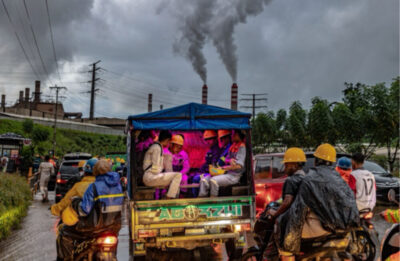
In Indonesia, our partners have revealed the social and environmental costs of nickel mining tied to the electric-vehicle supply chain. Their investigations and multimedia journalism, amplified through national outlets like Tempo and reaching millions of viewers, have reframed public debate, compelling automakers and investors to acknowledge abuses in their sourcing.
Building on this work, and the momentum from our Jakarta Transition Minerals Convening, a new collaboration is linking Indonesian environmental groups with counterparts in East Asia to strengthen transparency and accountability across the nickel supply chain. The emerging transparency has the power to influence companies in two critical ways: first, by reaching East Asian buyers of Indonesian nickel and making visible the violations and environmental harms associated with their sourcing; and second, by informing financial institutions that fund these companies but seek to avoid exposure to high-risk, damaging investments. Together, these pressures can help shift corporate behaviour and create incentives for improved mining practices in Indonesia.
Supporting local groups is essential to this approach, enabling them to collect credible data, pursue legal and policy reform, and amplify the stories of affected communities that might otherwise go unheard. This combination of local evidence and transnational leverage offers one of the most promising pathways toward a more responsible, equitable, and nature-positive minerals sector.
We can support many partners across the transition minerals space, but real change remains limited if they work in isolation. Impact comes when efforts are connected, aligned, and built around shared goals. The Accelerator ensures that partners’ work reinforces one another and lands at the moments that matter most, whether in political debates, investor decisions, or corporate actions.
Across these initiatives, our orchestration connects local evidence, media visibility, and financial influence into a coherent accountability architecture. Data gathered by scientists and communities now informs investor scrutiny; journalists and campaigners translate legal outcomes into public awareness; and downstream actors, from manufacturers to financiers, face mounting pressure to account for the true costs of extraction.
By funding, linking, and amplifying these efforts, the Accountability Accelerator turns individual projects into collective, lasting change and helps ensure that cleaner technologies are matched by cleaner, fairer, and more transparent supply chains.