From Commitments to Results: Reflections from COP17 and the F20 Climate Solutions Forums
05/11/2026
This article was first posted on the F20 website.
By Randall Krantz, Head of Strategy & Partnerships, Accountability Accelerator
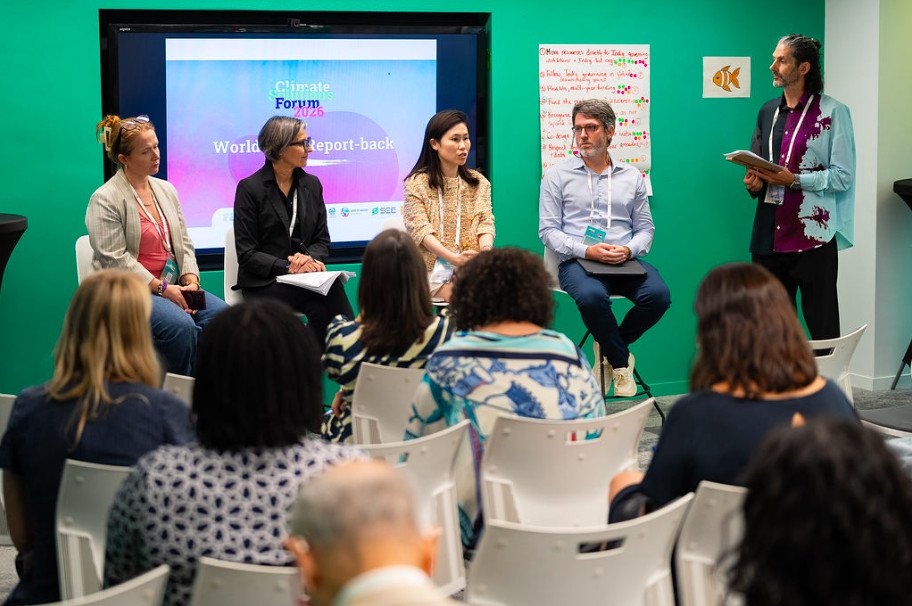
Having recently facilitated two F20 Climate Solutions Forums in Hamburg and Washington, I arrived at COP17 in Yerevan thinking about how we move from ambitious commitments to meaningful action on the ground.
This question ran through both F20 gatherings, where foundations and partners explored how philanthropy can strengthen collaboration and sustain progress in an increasingly fragmented geopolitical environment. Our conversations followed a simple progression: Relationships, Resilience, Results. The premise was that no single organization, however ambitious, can deliver the systemic changes we need on its own.
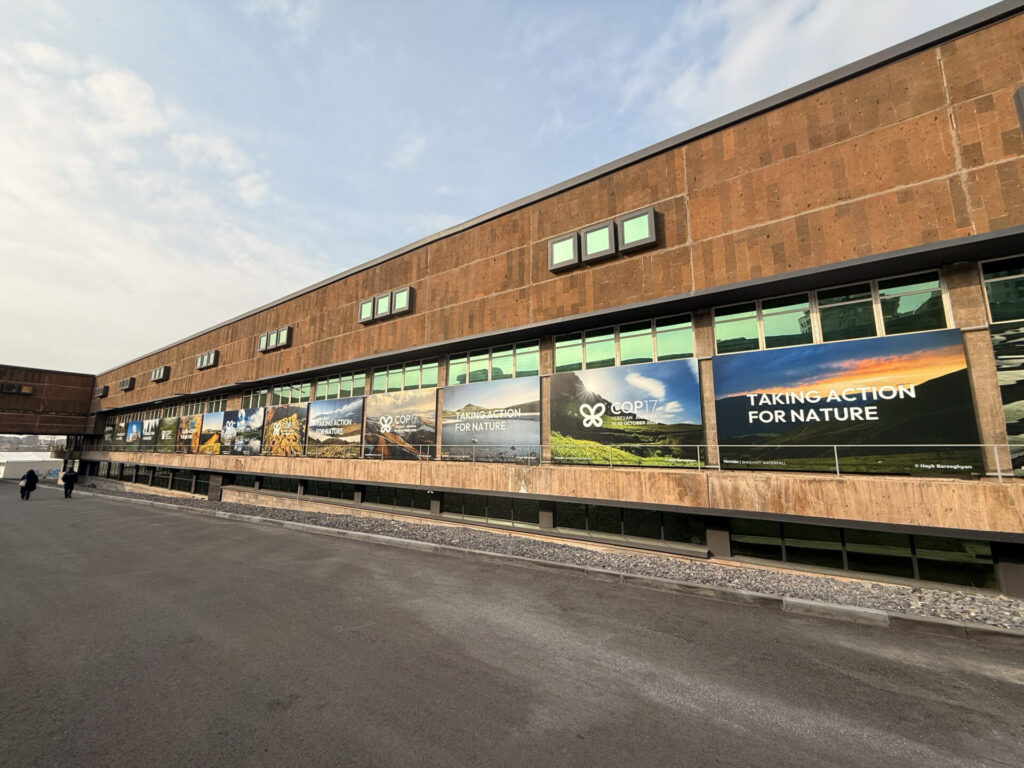
It was encouraging to hear a similar emphasis at COP17. Under the banner of Action for Nature, the conference reflected a growing recognition that agreeing on targets is no longer enough. The Yerevan Declaration called for measurable progress on governance, implementation, and accountability.
Three observations from Yerevan particularly resonated with our F20 discussions.
Connecting climate and nature philanthropy
One of my surprises at COP17 was how few philanthropic funders I encountered compared with the climate COPs and Climate Weeks I have recently attended.
Philanthropy was certainly not absent; important funders were represented and some substantial financial commitments were announced. Still, it left me wondering whether the philanthropic communities working on climate and nature are as interconnected as the challenges they are trying to solve.
Climate change and biodiversity loss are deeply intertwined, and transforming our energy, food, and financial systems is central to addressing both. Yet the philanthropic communities working on these issues tend to operate through different networks, priorities, and funding mechanisms.
The answer is not necessarily to bring more funders to biodiversity conferences, but to build stronger bridges between climate and nature philanthropy, connecting strategies, and identifying opportunities for joint action. This is precisely the kind of role networks such as F20 can play, and something we try to promote at the Accountability Accelerator through our regranting.
From financing green projects to greening finance
While at COPs, I always try to spend time in the negotiations and high-level meetings, which are why the COPs exist, after all! A second observation came from one ministerial discussion on biodiversity finance, where I was struck by the growing emphasis on shifting from financing green projects to greening the financial system itself. I was pleased to hear representatives of multilateral development banks, central banks, and private financial institutions express support for this direction.
This might not sound like a big shift, but it is fundamental. We cannot expect investments in conservation and restoration to compensate indefinitely for an economic system that incentivizes nature’s destruction. This would be like focusing on climate adaptation without addressing the emissions driving climate change.
While in Yerevan, I heard some numbers that illustrate the challenge. According to UNEP’s State of Finance for Nature 2026, for every $1 invested in nature-based solutions, approximately $30 flows into activities that damage nature. An estimated $7.3 trillion in annual nature-negative finance dwarfs the $220 billion directed toward nature-based solutions.
Unless we redirect these vastly larger flows of capital, we will be fighting an increasingly expensive uphill battle. MDBs, Central Banks and private investors will play a key role.
Financial institutions are beginning to integrate climate considerations into lending, investment, and risk management. Nature needs to become part of that same transformation, rather than remaining a separate category of green finance.
For philanthropy, this suggests an opportunity to support the policies, standards, market incentives, and accountability mechanisms that can influence trillions of dollars in mainstream finance, rather than focusing exclusively on projects it can fund directly.
From commitments and reporting to performance and impact
A third encouraging theme at COP17 was the growing emphasis on going beyond tracking commitments, activities and inputs, to measuring performance and impact.
The need for this shift is clear: the Convention on Biological Diversity’s State of Biodiversity Action assessment found that nearly 90% of countries have established national biodiversity targets, yet fewer than half of assessed targets are on track.
The private sector faces a similar challenge.
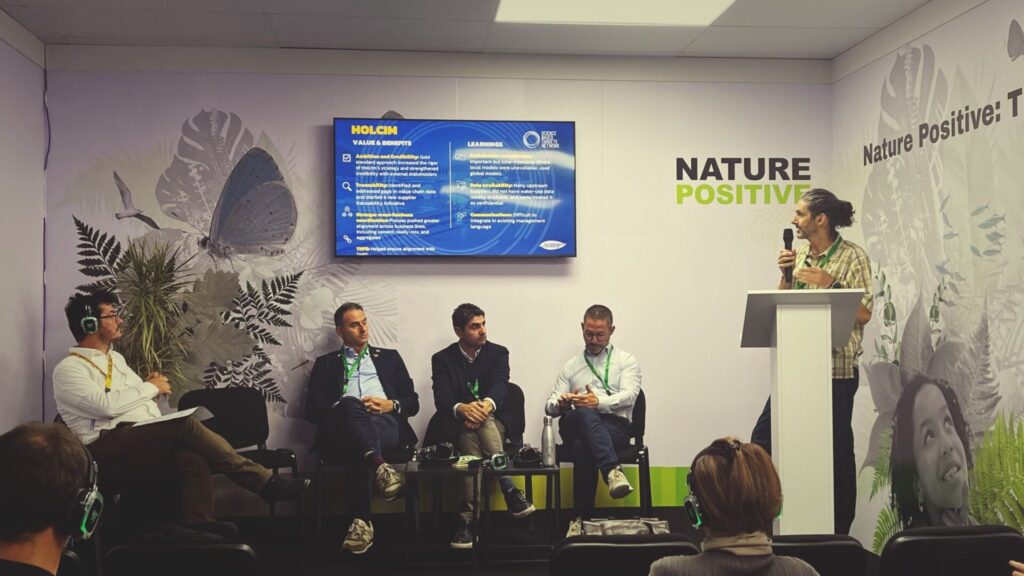
There has been important progress in building the infrastructure for corporate accountability. More than 1,100 organizations are making at least some disclosures aligned with the Taskforce on Nature-related Financial Disclosures, while the Science Based Targets Network (SBTN), for which the Accelerator manages the independent target validation service, is engaging with 300+ companies to establish scientifically credible targets for reducing their impacts on land and freshwater.
This is critical progress, but disclosure is not performance and commitments are not outcomes. The next frontier is to ensure that this information changes decisions: how companies source materials, manage supply chains, use land and water, and allocate capital.
SBTN has made important progress towards helping companies turn their science-based targets for nature into practical action: new resources significantly expand its implementation guidance and tools, helping companies identify relevant actions, assess their feasibility and connect science-based targets with broader nature and climate transition planning. Yet more support will be needed to continue driving uptake, validation, and implementation.
The 2026 IPBES Business and Biodiversity Assessment reinforces the need to move beyond reporting toward changes in business decisions and measurable ecological outcomes. Corporate disclosure on nature impacts is slowly getting to scale, yet implementation of biodiversity-related business targets remains weak.
We need to move beyond documenting the decline of nature to restructuring the economic activities driving that decline—and to measure whether those changes are working.
Turning relationships into results
I came away from COP17 encouraged by the growing recognition that implementation, finance reform, and accountability must move to the center of the biodiversity agenda. But there is still a long way to go.
At the F20 Climate Solutions Forums, we challenged participants to move beyond recommendations and identify practical pathways for implementation: who needs to do what, by when, and how can collaboration make it happen?
For philanthropy, the opportunity is to connect climate and nature strategies, help redirect financial flows driving environmental harm, and strengthen the accountability infrastructure that makes progress measurable.
The theme of COP17 was Action for Nature. That action needs to be systemic, coordinated, and sustained.
And perhaps that brings us back to the question we explored throughout the F20 Climate Solutions Forums: what can this community achieve together that none of us could accomplish alone?