Aligning Action on Climate and Nature Workshop at LCAW
28/06/2024
We are excited to share insights from our recent workshop, which united key leaders and stakeholders to discuss the critical alignment of corporate commitments to climate and nature. This event emphasized the importance of a robust ecosystem of support and pressures.
During the workshop, we delved into how corporate commitments can support the goals of the Paris Agreement and the Global Biodiversity Framework (GBF). The focus was on driving tangible, verifiable actions to bridge gaps in the current accountability landscape.
How do we define a robust corporate accountability ecosystem?
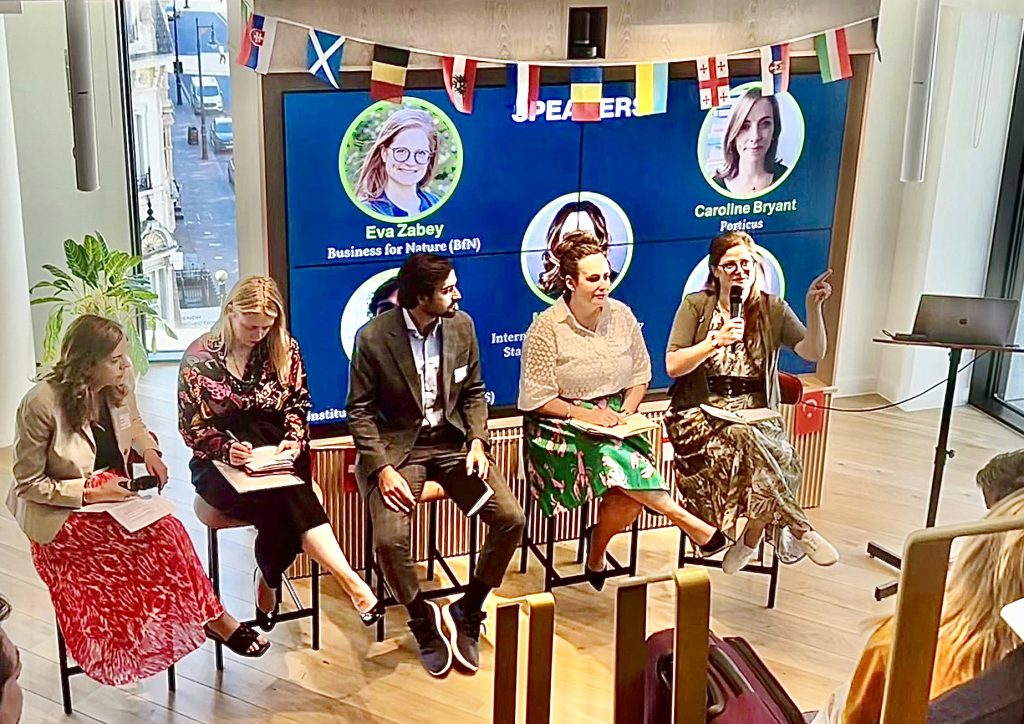
Four distinguished speakers shared their insights on the corporate accountability ecosystem:
- Eva Zabey, CEO, Business for Nature: Discussed the role of governments in setting regulations and how companies can hold them accountable, emphasizing the importance of policy and regulatory environments.
- Mardi McBrien, Chief of Strategic Affairs & Capacity Building, IFRS Foundation: Highlighted the implementation of corporate accountability in Europe and the ISSB’s efforts to build capacity and align climate disclosure with nature.
- Lucca Rizzo,Climate Finance – Special Advisor to the CEO, Instituto Clima e Sociedade: Spoke on the critical role of the G20 in the run up to COP 30 next year, including supporting events held throughout 2024, such as the Brazilian Climate Finance Forum in February, as well as the C20 civil society summit and the F20 Foundations meetings over the summer. These will be critical in bringing together climate and nature and in setting up the framework for deeper accountability for companies.
- Char Love, Global Director of Advocacy, Natura & Co.: Provided a corporate perspective on nature accountability, stressing the need for businesses to make net-positive impacts on communities and landscapes. She also noted the importance of inspiration, quoting Nigel Topping, ‘We must be guided by the science and moved by the poetry’.
What does accountability look like in action?
Our Executive Director, Natasha Matic, did a presentation on the Accelerator’s mission through our three primary activities: grant-making, orchestration and convening, and SBT Validation. As a re-granter and intermediary with a deep understanding of this space, we support and coordinate organizations that are filling critical gaps, ensuring that existing solutions are leveraged effectively.
Three examples of our work highlight why this effort is critical and how it fills important gaps in the ecosystem:
- Congo Basin Grantmaking:
- Focuses on environmental harm from mining and the implementation of FPIC.
- Addresses the need for responsible sourcing of critical minerals and integrates science-based targets on freshwater.
- Science-Based Targets for Nature (SBTN) Support:
- Global training programs to build capacity and demand for SBTNs.
- Specific projects, such as bridging science and implementation in the Mississippi Delta, help companies set effective Science-based Targets for freshwater.
- SBTN Validation:
- Ensures that corporate targets are independently validated, reinforcing accountability and credibility in their implementation.
Our mission is simple but ambitious – we aim to drive corporate and financial institutions’ action to stop and reverse harm to nature through an impactful accountability ecosystem. We need frameworks to be translated into concrete, tangible, verifiable action, both bottom-up and top-down — this means accountability. And right now, there are still many gaps and silos in the accountability architecture.
The reason we decided to do this work is that if all the components and tools of the accountability operating system are in place (standards, data, financing, capacity building, awareness, finance, legal, standards, campaigns, and other tools), we will scale up and speed up corporate and financial institutions’ action. We will support them and pressure them to act, reduce greenwashing, and most importantly, start building trust in the system and among all the stakeholders.
Key Takeaways:
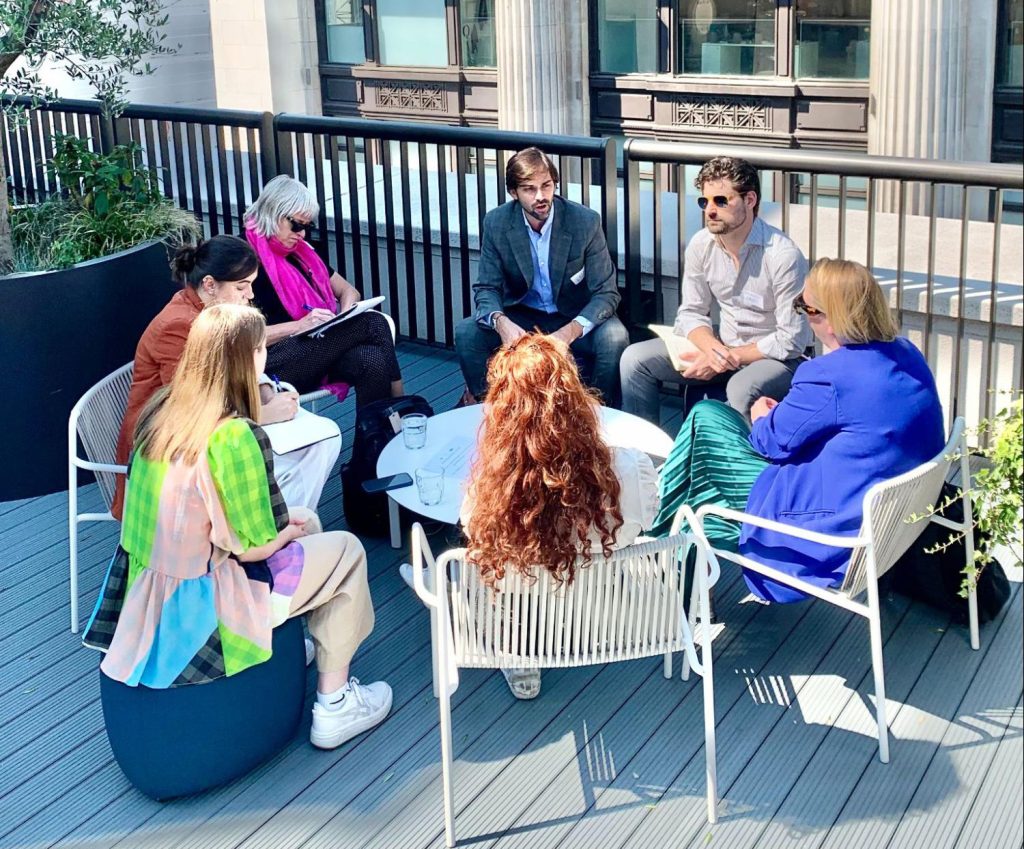
During the breakout sessions, participants engaged in lively discussions to address critical questions, such as how climate initiatives can learn from nature on accountability and vice versa, identifying gaps in the current accountability ecosystem, and outlining the necessary steps for alignment leading up to COP30. Each group then presented their insights and recommendations to the plenary, highlighting innovative ideas and strategies. The highlights of this discussion were:
- Enhanced Corporate Accountability:
- The necessary standards for Nature are in place.
- Commitments need to be translated into concrete actions: from targets to transition plans, and from transitions to business plans.
- Ecosystem Gaps:
- Capacity building is essential for both companies and NGOs.
- There needs to be alignment across nature and climate.
- Breaking silos between the Global North and Global South, as well as policy and regulation enforcement, is crucial.
- Common Narrative:
- A unified voice for Nature is needed.
- Climate Champions should evolve into Planet Champions.
- Climate Weeks should expand into Climate, Nature, & Justice Weeks.
- Changing Culture:
- Organizational transformation begins at the top and permeates every aspect of the organization.
- The role of culture in driving this transformation was underscored by participants.
Doree Marentette from the European Climate Foundation concluded the event with closing remarks, emphasizing the importance of the day’s discussions and outlining the next steps. The event wrapped up with a networking session, offering participants the chance to continue their conversations and establish new connections.
Looking ahead, we are dedicated to continuing this crucial work and leveraging the insights gained to drive meaningful action at COP16 and COP30. Together, we can ensure a sustainable and resilient future for our planet.
Special thanks to Porticus and the European Climate Foundation for co-designing and co-hosting this impactful event with us!